
We must change our lives for a more beautiful world
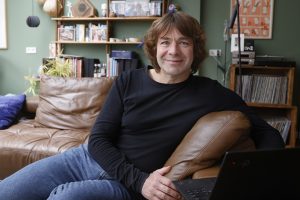
Evert van Ophem on the importance of sustainability. Evert van Ophem is a buyer at Kyndryl. Together with the other buyers, he is responsible for spending with external parties. These may be services, but also telephones and office chairs, for example. Here, too, sustainable production is part of Kyndryl’s requirements for suppliers. In Evert’s private life, sustainability also plays an important role. In fact, he is actively working on it every day.
That’s true, yes, that I’m working on it every day. I am very concerned about our pattern of consumption. We consume and use goods and services every day. Goods and services that consume more resources than we can continue to produce in the long run. In the process, we leave behind huge waste streams. We are all just not sustainable enough, especially in Western Europe and the United States. We are tapping into our reserves. My concern is not new. In 1999, I studied Nature & Environmental Resource Economics at the University of Copenhagen. The key question during that study was: how to make optimal use of the resources the earth provides. To devise and develop techniques and means that ensure that natural resources
yield as much as possible. And therefore nothing is wasted.’
‘Sustainably producing farmers could use our support’
‘You can calculate what nature is worth to society, and make policy on that. That is what is happening now. 25 billion euros have been allocated to preserve and restore natural areas. How are we going to spend that budget? I find that very interesting; I follow that whole process closely. I think most people do want to
make space for nature and the environment. Until the wallet has to be drawn. We criticize the way Dutch farmers produce, but by no means always buy the products that are produced sustainably. That’s a shame, because the sustainable farmers could really use our support.’
‘You can also do a lot for nature as an individual’
‘You sometimes hear people say: as long as a company like Tata Steel is so polluting, there’s no point in what I’m doing. I find that such a pity. Because we can all have an impact, sometimes through very small changes. When it comes to our food: I buy Dutch-produced meat and seasonal fruits and vegetables. Of course, eating no meat at all or less meat is even better. I myself have started to eat a lot less meat in recent years. It is mainly about awareness. Buying less stuff, driving less, flying less. You probably don’t realize it, but the various things we buy – especially electronics, but also books and CDs, for example – are an enormous burden on the environment. That’s why I only buy what I really need, second-hand if possible. As long as we keep buying all those products, we are partly responsible for the poor state of our environment. I myself travel to work by public transport, although I understand that this is not feasible for everyone. But you can try to use the car less often. By not flying anymore – or as little as possible – you can also do a lot for nature and the environment. A long weekend in Barcelona? I don’t do that anymore! A short vacation in the Netherlands can be just as much fun. Fortunately, Kyndryl is also working on this. The number of business flights has decreased enormously. A good development.
‘I may be more fanatical than many other people’
‘You can also make more sustainable choices in your own home. I use green energy, my house is insulated as much as possible and we installed solar panels. Furthermore: LED lighting everywhere, the boiler output temperature lowered to 60 degrees and the heating in the living room is set to a maximum of 18 degrees.
These are all sustainable adjustments that cost little or nothing, but do generate money annually. Other investments are more expensive. Will a heat pump further reduce my energy consumption? Maybe slightly, but I suspect the investment is relatively too high. You always have to look at the total picture. Another tip: fill your garden with trees and flowers, with as few tiles as possible. When it rains hard, the neighbors have water in the garden. Not so with us. Many colleagues are also working on this. I’m really not a loner, although I may be a bit more fanatical than most. So fanatical I am, but certainly not a shining example. My ecological footprint is still too big. But I do try to make it as small as possible. I know that sustainability is also high on the agenda at SPIN. That doesn’t surprise me. SPIN is a well-functioning pension fund. I am pleased that sustainable investment is receiving attention from the pension fund. Quite logical, actually. After all, what good will your pension be if there is no longer any beautiful nature to enjoy? If we don’t watch
the world will become unlivable. It really is happening much faster than we thought 20 years ago. We all have to change. That’s not a bad thing at all, because it pays off handsomely. After all, we all benefit from a more beautiful world!